1.07.2010

Past, Present, Future... Perseverence


           Beautiful writing is what fascinates me the most.  Powerful ideas simply expressed in language are impressive and beautiful, while gestural and confident marks may express meaning on various levels.  Writing and drawing have become equally important to me over the course of many years of journaling and artistic expression.
           Journal writing became a familiar and necessary practice for me growing up.  I wrote in journals to unload the weight of mental and emotional burdens and to celebrate in moments of gratitude and joy.  I learned to converse with myself, putting the intangible and fleeting into concrete and approachable words, which significantly validated the various facets of my own subjectivity.
           Journaling for me has taken on a new form.  My drawings have evolved into a culmination of expressive handwriting free from the conventional left-to-right, top-to-bottom orientation.  It is no longer restricted by the constructs of a defined language, and is instead non-sequential and layered. 
The content of these new drawings deals with tension and conflict surrounding my identity as a fourth generation Korean-American woman from Hawaii living in the American South.  Issues of independence, responsibility, racism, sexuality, spirituality, and morality were in a constant state of conflict due to contradicting cultural norms.  Individuality conflicts with cultural expectations of submission and sacrifice. 
The gestural brushstrokes boldly evoke Asian calligraphic references in the same way that one is immediately confronted by my ethnicity. The process of creating these drawings mimics the way my identity is broken down into visible categories based on first impressions, and to experience my drawings or me accurately one must engage in conversation.  Both the initial marks made with black ink and my ethnic identity are permanent—as soon as the mark is made, and as soon as I am born, all that is left to do is accept it and grow with persistence and intentionality toward a reconciled and complete self. 
The framework established by the gestural marks provides a base for subsequent additive marks that symbolize the act of reconciling the past—filled with uncontrollable circumstances, lost relationships, and buried memories—with the active present and the more hopeful future. 
           Pursuing a graduate degree in painting and drawing will allow me to further investigate hybrid cultural identities within a globalized society.  Although the content of my work stems from personal experience, the issues it addresses are relevant to immigrants all over the world as well as many biracial individuals.  I intend on refining a global visual language that confronts cultural boundaries to inspire accessible dialogue among unique yet displaced individuals, and to invite others to participate.  

This is about 3x4'.  It's the first of my third set of three (3-1), and most people's favorite.


Details of the first drawing.


This is the second of the series (3-2), with more opaque ink.


Detail of the second drawing.


This was used with only a corner of my brush, with less ink.
Third of the third set of three (3-3).


Details of the third drawing.


First of the fourth set of three (4-1).


Detail of first.


Second of the fourth set of three (4-2).


1.04.2010

Evolution Begins...

As I explored the writing on my initial drawings, I wondered what the relationship was between structure and chaos, whether the spontaneous marks would react differently within a structured framework.  I experimented with origami diagrams and gestural, energetic marks integrated within the geometric forms.  I soon discovered that there was no successful integration, just another layer "placed" on top of the framework.  Disappointment lingered momentarily, just until I realized that if this process of creating a drawing is indeed mimicking the much practiced act of journaling, then the content should be closely related to what I experience daily. 


I could go into a deeper explanation of what's being conveyed here, but I really enjoy hearing others' responses.  These drawings have a life of their own, and they relate to different people in different ways.  I'll post my most recent artist statement with my most recent work...

12.24.2009

The Beginning of my Idea...

These are about 3.75' x 5'.  The spontaneous drawings from my sketchbook seemed the most natural to me, the intuitive marks were honest and connected to what I was thinking and feeling in that moment.  These three drawings stand as research, a process of exploring my options, in order to get a feel for what it is that really drives me to create.


Here is a detail of the above drawing:


The marks are a way for me to "write" down what I'm feeling at a much more rapid pace in order to accurately capture my mood in its entirety.


I was experimenting with various frameworks, different compositional layouts so that I can observe how my marks in turn react to the structure.  If the structure changes, I noticed that the marks began to behave differently.  I love seeing structure and order in the seemingly chaotic world we live in.


Here I introduced a little bit of color and the dotted lines.  Color is subtle yet bold on its own.  When found within the context of the various marks, it becomes muted, and almost unnoticeable.  The dotted lines signify various connections made during the process of journaling, or within one's daily routine.

Here's a detail of the above:


This is the first time I've ever posted my work on the web.  I feel a bit vulnerable, but recently I've been asked many times if I have a website of my work yet.  It is in the making, so I will use Pineapple Soju as a place to gently introduce my work to those around me.

11.25.2009

Style vs. Drive

Here is an artist who deals with large scale, expressive brush-strokes installations. It's pretty amazing, and the thing that kills me the most is just how SIMPLE her idea is.

As my wise uncle in Hawaii would say... "Who would'a thunk it~!?"

Here are some images of Sun Kwak's work:


And it's all done with masking tape.  Simply amazing.

I mention her because I believe my work is similar in addressing the cultural significance of the gestural brushstroke of calligraphy.  I have been searching for artists who work within a similar cultural context as I do.  The scale of Kwak's installations is inspiring me to work much larger, but I do not have the space for it.  Also, the difference is that my work is not installation; they are all drawings on paper.

Soon enough, as I develop a strong and coherent body of work, I will post images of my own drawings.  The direction it has taken is quite interesting and addicting in the sense that I wish to devote more and more time towards its development.


11.17.2009

Glorified Uncertainty

From Gerhard Richter's note from 1966...

I pursue no objectives, no system, no tendency;
I have no programme, no style, no direction.
I have no time for specialised concerns,
working themes, or variations that lead to mastery.
I steer clear of definitions. I don’t know what I want.
I am inconsistent, non-committal, passive;
I like the indefinite, the boundless; I like continual uncertainty.

(yet he has committed, persevered, produced, and mastered)

Back to writing about the critical reception of his work in the 80s... sigh.


Wolke Cloud 1976


Ema (Nude on Staircase) 1966


Gilbert & George 1975


Fikcion 1975


Overpainted Photos

Gerhard Richter Quotes

Quotes -"Gerhard Richter: The Daily Practice of Painting, Writing from 1962 - 1993"

--The idea that art copies nature is a fatal misconception. Art has always operated against nature and for reason.

--All we can represent is an analogy, which stands for the invisible but is not it.
To believe, one must have lost God; to paint, one must have lost art.

--I prefer the 'naive' photograph, with a simple, uncomplicated composition. That's why I like the Mona Lisa so much; there's nothing to her.

--Being able to do something is never an adequate reason for doing it.

--Theory has nothing to do with a work of art. Pictures which are interpretable, and which contain a meaning, are bad pictures ... It [making good pictures] demonstrates the endless multiplicity of aspects, it takes away our certainty, because it deprives a thing of its meaning and its name.

--Talk about painting: there's no point. By conveying a thing through the medium of language, you change it. You construct qualities that can be said, and you leave out the ones that can't be said but are always the most important.

--Now that there are no priests or philosophers left, artists are the most important people in the world.

--I do know that painting is not without an effect -- I only want it to have more of one.

--Painting is total idiocy. [On why he continues painting, despite lack of effect]

--Not bankruptcy, but always inadequacy. [On the limits of painting]

--Surely you don't think that a stupid demonstration of brushwork, or of the rhetoric of painting and its elements, could ever achieve anything, say anything, express any longing.

Reading thoughts of famous artists somehow makes them seem more human. I think the idea of a successful artist is not the fact that one painting sells for $13 million or more, but that he or she has found a way to achieve a level of insanity and obsession with the creative process.

10.11.2009

Origami Craze

Here are a couple cool origami links that are super cool to look at...

Origami In the Pursuit of Perfection by Mabona Origami - Watch the video, it's a stop motion animation with origami.  It's beautiful.


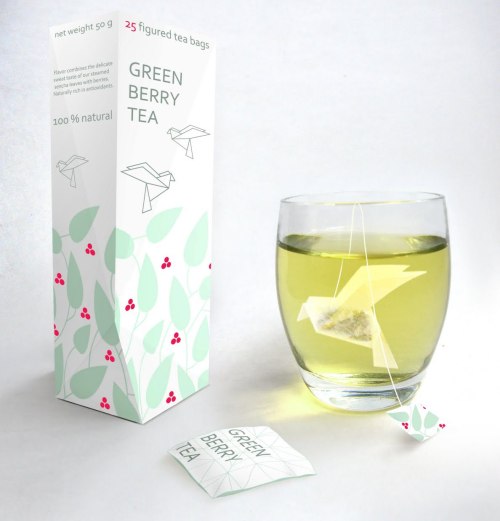
The coolest tea bag ever :)

I also really enjoy Brody Neuenschwander's calligraphic qualities.  He is a recent inspiration for me as well.  The line quality, integrated within the composition is beautiful.


As a growing artist, I realize that there were numerous projects completed in the past that were derived from an interesting concept.  What I realize today is that often times these works were mere introductions to the specific idea.  One ongoing subject matter that I was drawn to in high school was the art of origami and its cultural significance in Asia.  I created several works of art based on the visual aesthetic of origami cranes or turtles, incorporating its geometric interpretations of organic forms in nature. 
More recently, I developed a style of gestural drawing that felt so natural to me.  It was as if I were “writing” in my own language, similar to the spontaneity of written streams of consciousness.  In this process, I identify my marks with various forms of calligraphy, where the line quality expresses just as much as, if not more than, the literal meaning behind the written words. 
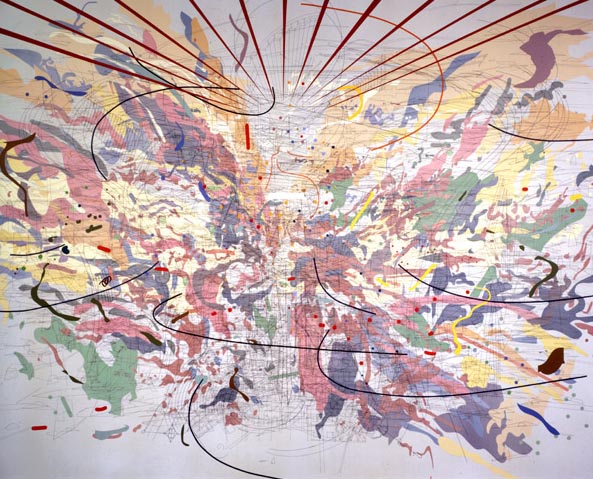
As a result of these observations, I began my research into origami and calligraphy.  Two artists have inspired me to explore these topics in greater depth.  First is Julie Mehretu, who is an Ethiopian-born artist who resides in New York.  I feel a strong connection to her style of drawing and the way she creates a whole new universe within a single canvas by utilizing truly dynamic compositions on a large scale.  She critically examines existing social structures that are potentially and historically detrimental to humanity, yet some of her drawings maintain a delicate quality that mimics calligraphy that evoke feelings of freedom.


 The second artist who inspires me is an origami artist named Peter Engel.  I stumbled upon his book in the bookstore and was immediately fascinated by his unique passion for origami.  Although he is currently an architect, his love for origami’s philosophy and practice is genuine and inspirational.  His explanation of how closely related nature and mathematics are has led me to a new level of understanding in the topic of origami. 
My work has now begun the process of uniting and exploring the relationship between structure and nature, which many times are found in each other as well as on opposite ends of the perceived spectrum.  I intend on reconciling the natural style of drawing with the geometric structure of origami with pen and ink on paper as my medium of choice.  Once I begin to gather how the two elements interact, I will then investigate how to push the idea further, producing a coherent body of work that showcases the visual development of the initial relationship.